Resources
Become a member
GSC ANNUAL REPORT
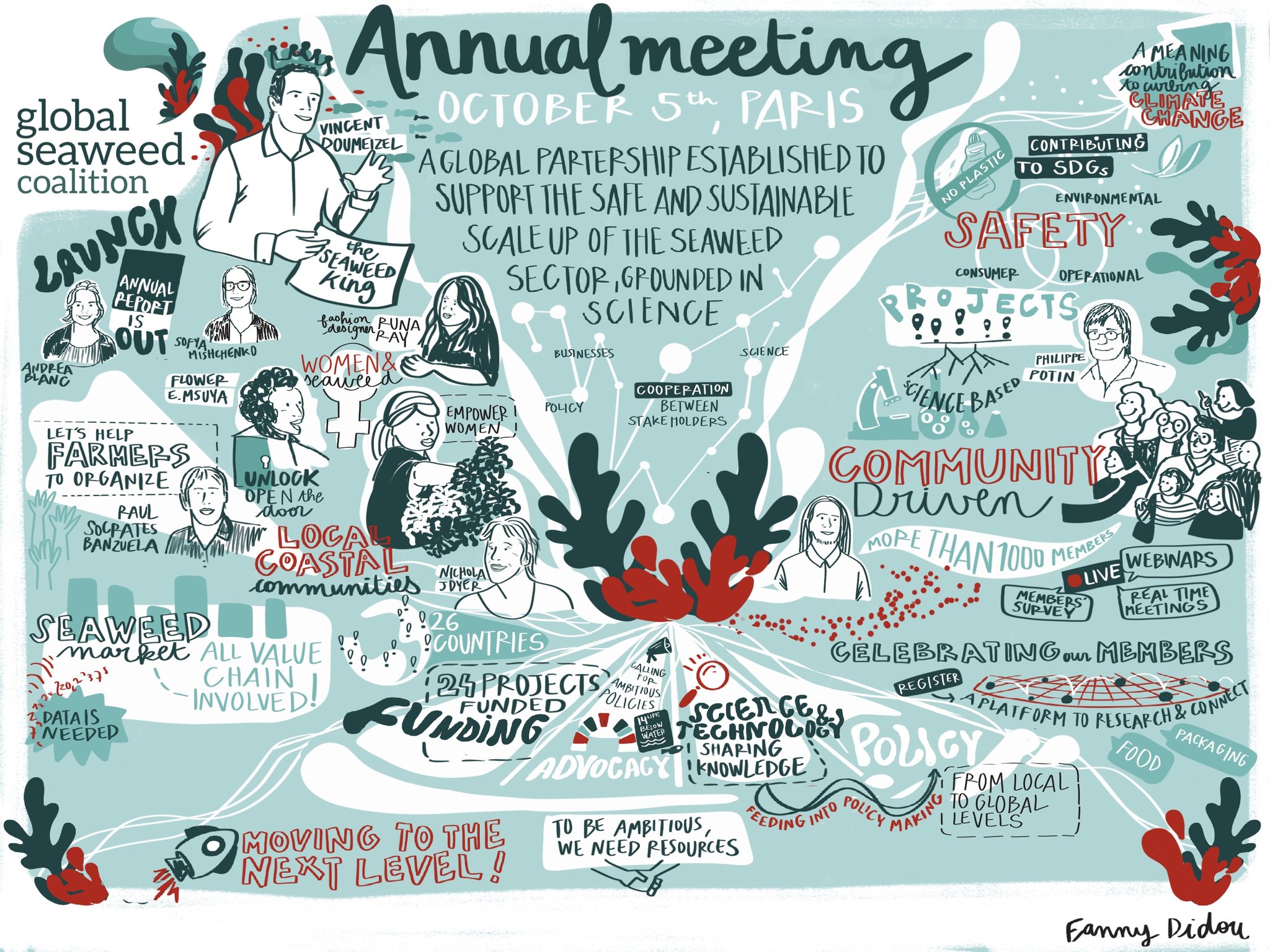
Download the summary of our Annual Meeting held on October 5th 2023 at the Maison de l’Océan in Paris. The meeting was an opportunity to look back at the Coalition’s substantial achievements from its first two years in operation, to present the roadmap for the coming years, and to feature member achievements. Watch the replay here.
REPORTS
Measuring the social impact of regenerative seaweed farming
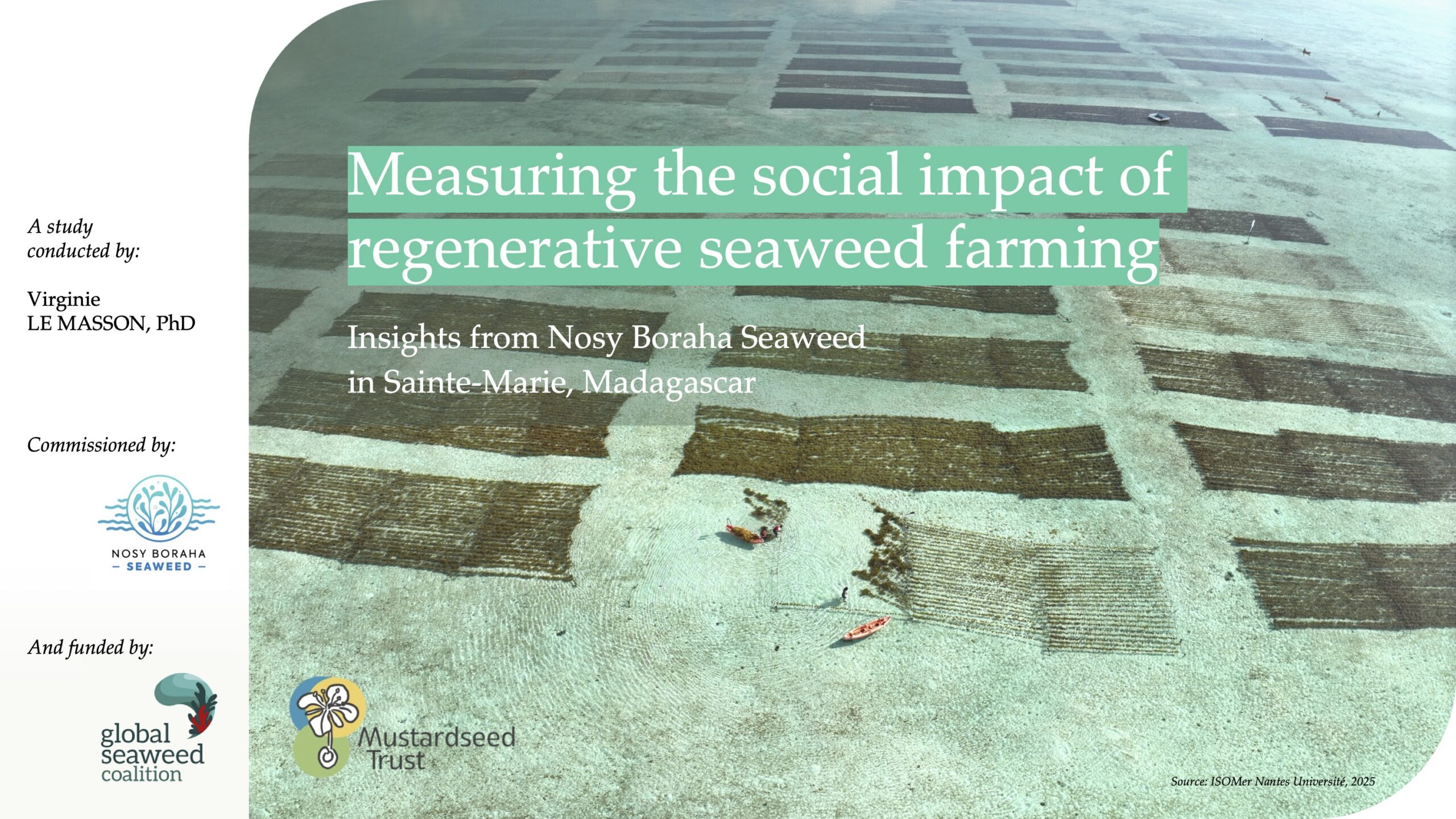
A social impact study on seaweed farming and rural livelihoods in Madagascar conducted by Dr. Virginie Le Masson and funded by the Mustardseed Trust and the Global Seaweed Coalition. It examines the socio-economic effects of the village contract aquaculture model developed by Nosy Boraha Seaweed (NBS) on the island of Sainte-Marie. Operating across a 250-hectare lagoon and with an environmental permit, NBS works through a structured contractual approach with seaweed farmers that provides them with materials, technical support, and fair income. The study draws on interviews and focused group discussions with NBS workers and externally, and causal attribution analysis to document how seaweed farming has transformed livelihoods on the historically underserved East coast of the island — from job creation and income stability to food security and women’s economic empowerment. It also identifies areas of vigilance, including benefit inequities between worker categories and ongoing environmental pressures.
Access the report here
The State of the World’s Seaweeds 2025
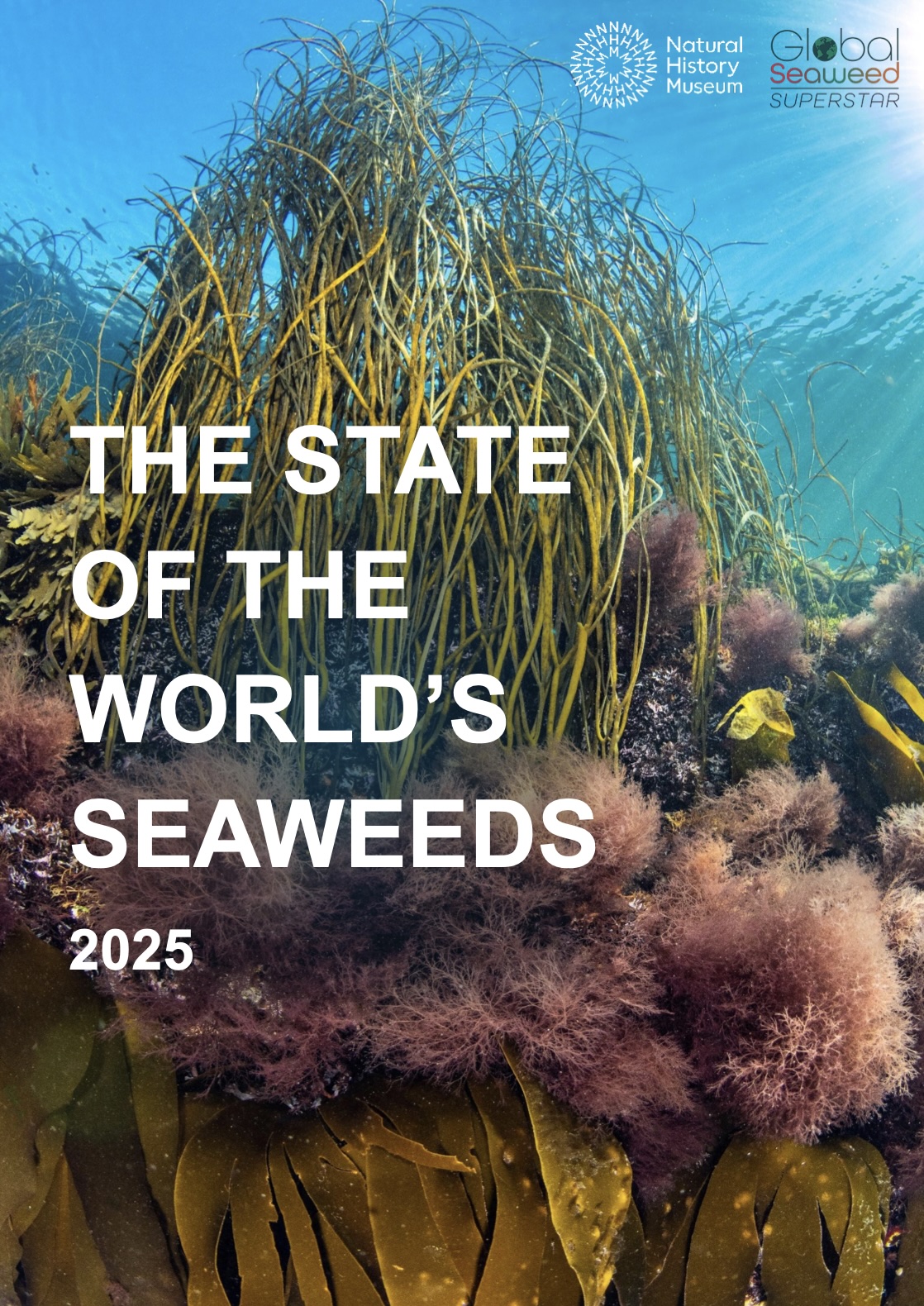
The oceans are experiencing extraordinary human-induced threats from global climate change, overfishing, pollution and an increase in invasive non-native species. Seaweeds create the largest vegetated marine habitats on the planet, which underpin global marine function but are threatened by the impacts of environmental change. Despite the importance of seaweeds, and the threats they face, they are afforded inadequate conservation measures, a major gap which urgently needs to be addressed.
The state of the world’s seaweeds has come about as a result of this need. It provides the evidence-base which will inform a ‘Seaweed Breakthrough’, a potentially powerful means of protecting seaweeds and seaweed habitats through the UNFCCC High Level Climate Champion 2030 Breakthrough Agenda. Through setting global targets to halt habitat loss, protect and restore habitats and secure sustainable investment, Breakthroughs falling under the overarching goal for Marine Conservation aim to achieve significant change to reach a resilient, zero carbon future by 2030 across every sector of the global economy.
Access the report here
Financing Regenerative Seaweed & Aquaculture
Seaweed and bivalve aquaculture are powerhouses of the regenerative ocean economy. Yet these climate- and nature-positive industries are underutilised and critically constrained by limited access to the finance they need. Together, the bivalve and seaweed sectors in Europe alone require an estimated €1.7 billion in debt financing over the next five years to develop sustainably and adapt to a changing climate. This whitepaper developed by Systemiq, the Global Seaweed Coalition, and Planet Ocean Capital, with support from Builders Vision builds on the 2025 report, Unlocking the Potential of Europe’s Seaweed and Bivalve Industries, developed by the Global Seaweed Coalition and commissioned by the European Investment Bank.
Access the whitepaper here
Unlocking the Potential of Europe’s Seaweed and Bivalve Industries
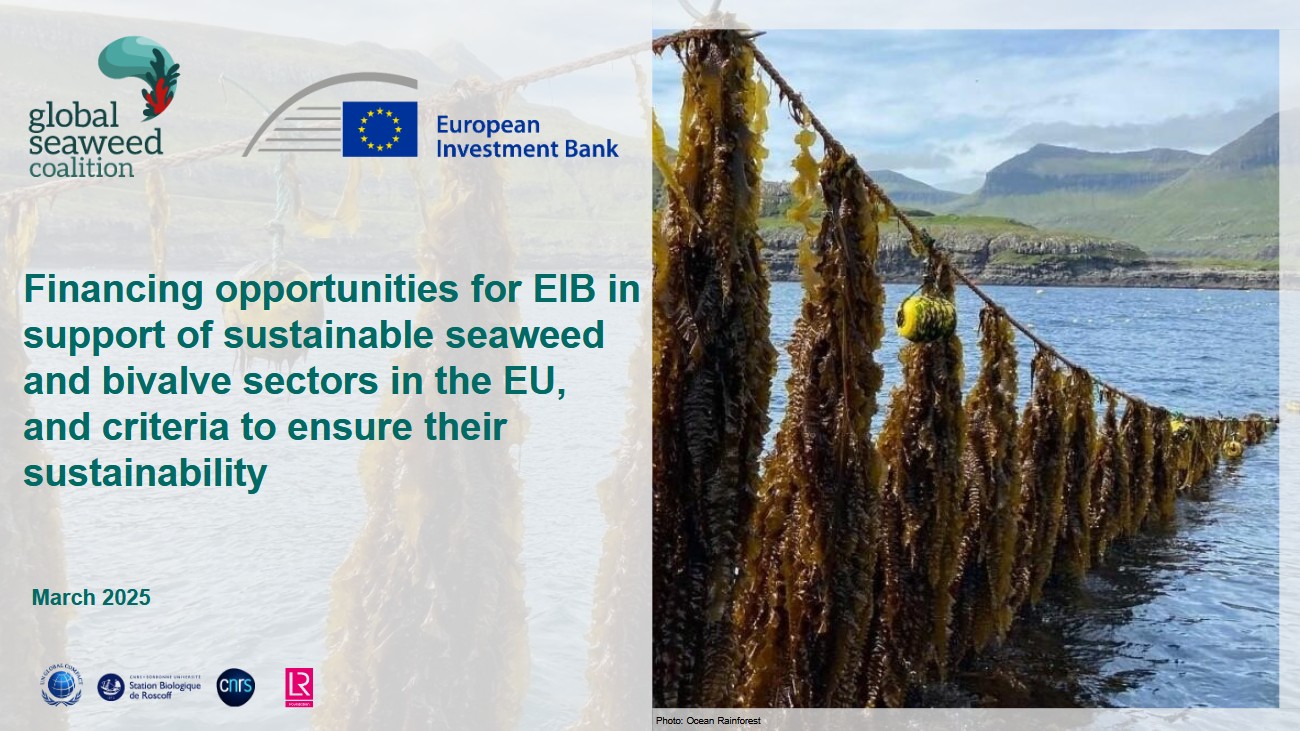
Seaweed and bivalve aquaculture hold immense promise for restoring ocean health, mitigating climate change, and strengthening coastal economies. Market forecasts point to double-digit growth over the next decades. Yet, despite increasing investment and political support, these industries face financial, technological, and regulatory barriers and climate risks that hinder their sustainable growth in the EU. Commissioned by the European Investment Bank (EIB), this report—developed with the Global Seaweed Coalition —explores how debt financing can accelerate the development of these sectors in Europe. This report was publicly launched at BlueInvest Day on March 6th 2025.
Access the report here
An ocean of opportunities: The potential of seaweed to advance food, environmental and gender dimensions of the SDGs (UNCTAD)
Within a sustainable ocean economy, seaweed collection, culture, processing, and trade is one of the sectors with the most opportunities to achieve sustainable growth by 2030. Seaweed farming culture is closely linked to food security, income, livelihoods, and traditional knowledge of rural coastal communities, particularly for women and Indigenous Peoples. The value of the seaweed sector remains mostly underappreciated and untapped, while it shows clear growth potential beyond its current markets. This study aims to contribute to a greater understanding of the seaweed sector as a driver of food security and women’s empowerment while addressing the interlinkages between food security, environmental sustainability, and trade. The study analyzes the seaweed sector and explores its linkages with food and nutrition security and environmental sustainability. In doing so, it collates the most recent available data and evidence on seaweed production and trade with a focus on developing countries. This publication was produced and coordinated by the Division on International Trade and Commodities of the United Nations Conference on Trade and Development (UNCTAD), based on a study of the UNCTAD Oceans Economy and Fisheries Programme.
Access the report here
Seaweed Farming: Assessment on the Potential of Sustainable Upscaling for Climate, Communities and the Planet (UNEP)
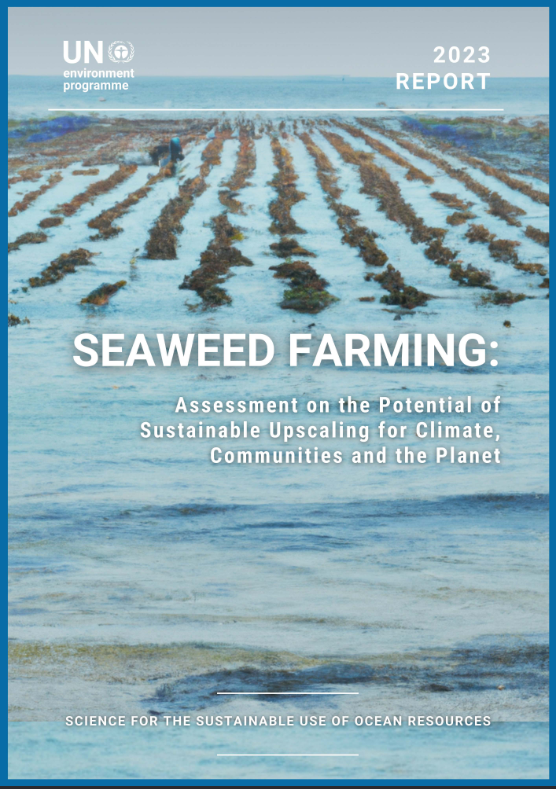
The UN Environment Programme (UNEP) recognizes the growing global interest in seaweed farming as a potentially scalable ocean-based solution to climate change that may provide environmental and social co-benefits as part of the advancement of resilient and climate smart aquaculture. To critically examine this potential, the report “Seaweed Farming: Assessment on the Potential of Sustainable Upscaling for Climate, Communities and the Planet” delivers an in-depth literature review and situational analysis scientifically assessing the potential for the sustainable expansion of seaweed farming to deliver climate benefits with minimal environmental and social risks. The report collates and scrutinizes existing research on the quantifiable climate benefits as well as the associated environmental and social risks and benefits of global seaweed farming. The scope of the report includes an investigation into the full value chain of seaweed farming with an emphasis on the potential for climate benefits realized through various natural and commercial use pathways, and the feasibility of upscaling global farmed seaweed production. The findings are synthesized in a situational analysis with a SWOT design (Strengths, Weaknesses, Opportunities, and Threats) for sustainable expansion of global seaweed farming.
Access the report here
The Global Status of Seaweed Production, Trade and Utilization – (UN FAO)
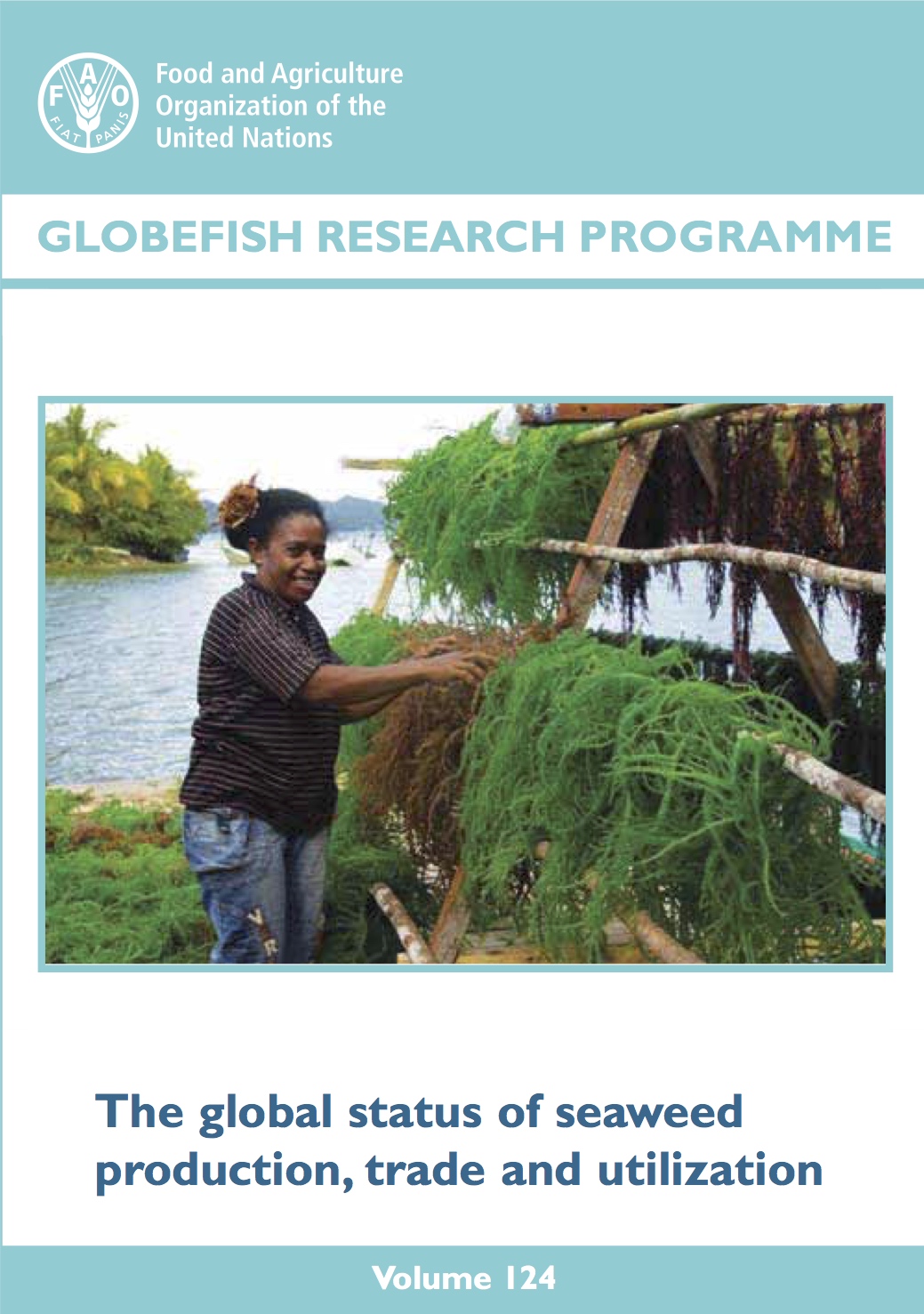
This FAO report is an update of the status of the global seaweed market: production figures from culture and capture, the size of the international market for seaweed and its commercially important extracts, the leading nations by region, developments in processing and utilization technology, and innovations, challenges and forecasts for the industry.
As it is not possible to feature all individual countries of importance in the seaweed sector, several have been selected as being representative of the different regions of the world: Asia (China, Indonesia, the Republic of Korea, Malaysia, the Philippines, Singapore and Thailand); South America (Chile); Europe (Denmark, the European Union); and Africa (Morocco, South Africa and Zanzibar (Tanzania). The sections on Chile, China, Denmark and South Africa are based largely on previous studies commissioned by the Food and Agriculture Organization (FAO).
Access the report here.
PEGASUS – Phycomorph European Guidelines for a Sustainable Aquaculture of Seaweeds
Domestication of the oceans is widely regarded as a possible solution to increase food and could be one of the next most important developments in human history. By 2050, the edible bioresource biomass will have to satisfy the 9 billion people predicted to live on the planet. Seaweed aquaculture can help to address global challenges related to nutrition, health and sustainable circular bio economy. Today, there is growing need for development, improvement and diversification of seaweed aquaculture practices in Europe, a continent characterised by its large coastal territory and wide range of climates.
The estimated value of the global seaweed production industry is more than ~ 8B€ (for 30Mt) and is continuing to expand. Seaweed are thus a promising bioresource for the future and the demand for high-value seaweed-derived compounds (cosmetics, food) is growing in Europe. However, European production lags behind Asian countries despite its large exclusive economic zone, its high seaweed biodiversity and its international leadership in fundamental research on seaweed genomics, genetics and cutting-edge techniques. Therefore, European industries involved in the development of sustainable seaweed aquaculture need to be supported. The 200p technical document “PEGASUS” highlights the current state of European seaweed production and pinpoints challenges for the development of this sector in the current European context. It proposes recommendations for short-term and long-term improvements at different levels of the chain.
Access the report here.
.
Seaweed as a growth engine for a sustainable European future (Seaweed for Europe)
Seaweed for Europe’s new report shows the economic potential of an expanded seaweed market in Europe could be worth €9 billion in just a decade. The report also finds that the seaweed industry could create up to 115,000 jobs in Europe by 2030 and deliver significant environmental and health benefits. Targeted investment, regulatory streamlining, increased research and development of new applications based on seaweed will be needed to unlock this opportunity.
Access the report here.
SOMOS: Technical standards for safe production of food and feed from marine plants and safe use of ocean space
Somos, a study into safety at sea, has been laucnhed as part of a partnership between Lloyd’s Register Foundation, Wageningen University & Research and TNO. The study has half a million pounds at its disposal to investigate safety aspects of combined activities at sea. The focus of Somos is on renewable energy production in combination with seaweed, used not only for food but also feed, bio-chemicals, energy and other valuable products. The grant was awarded by the Lloyd’s Register Foundation, which aims to contribute to the enhancement of resilient marine resources for tomorrow’s world population.
Access the study here.
COMMUNICATION TOOLS
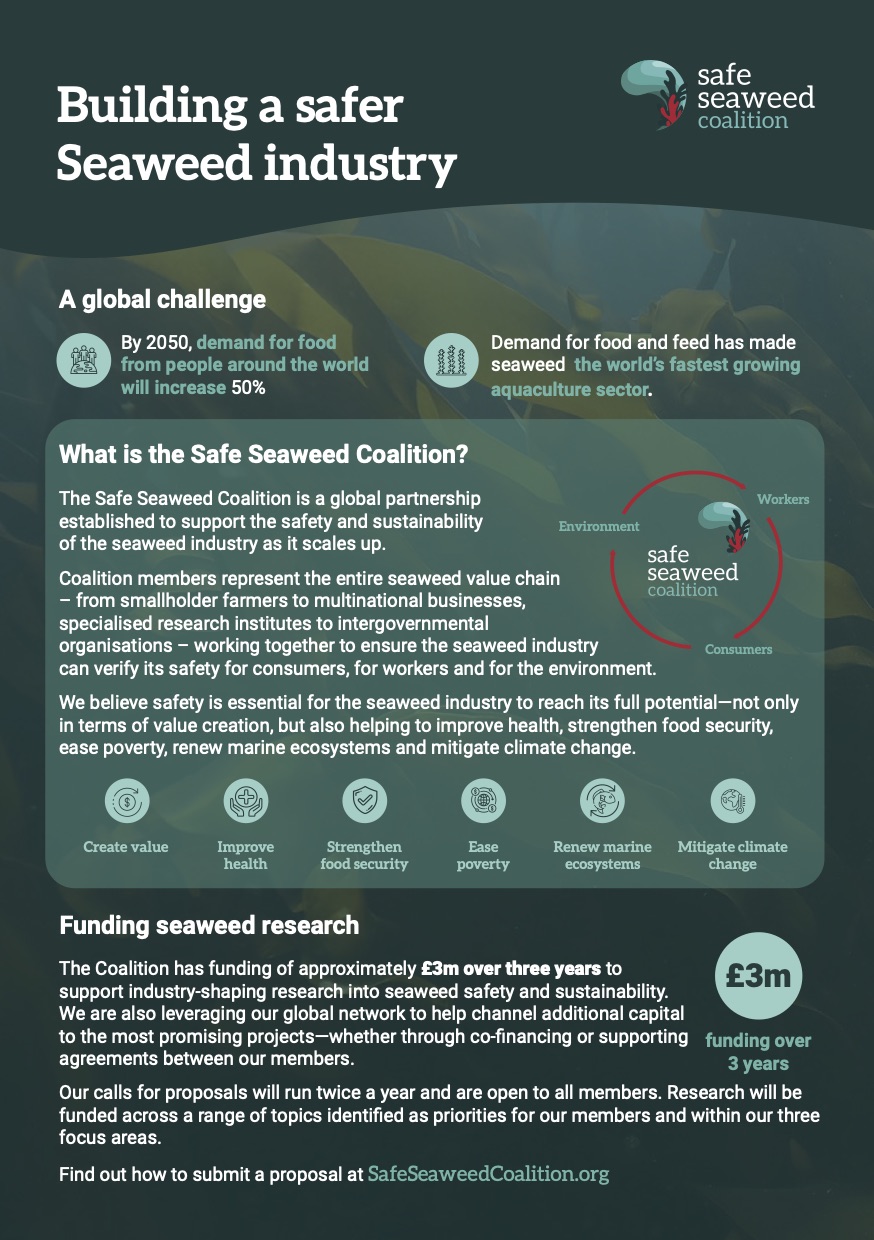
Download and share our leaflet, with a presentation of the Coalition, its objectives, funding and scope of action, available in the following languages: