News
Latest News & Upcoming Events

Member Roundtables: February 27th!
All our members are invited to join our member Roundtables on February 27th. We will holdtwo sessions : one at 11:00AM CET and one at 3PM CET in order to accommodate our worldwide membership. These sessions will include important updates and opportunities for members...

Study: how to increase the communication capacity of the Seaweed Revolution?
We are engaged with a team of CHARM-EU students conducting a research study to better understand the general public’s current awareness of seaweed and highlight potential gaps or needs. Their research is planned to be presented and shared in the context of the...
Congratulations to our Spring 2022 Grantees!
Our Annual Meeting in Lisbon was the opportunity to introduce our Spring 2022 Grantees to our worldwide community! After a highly competitive evaluation process by our advisory board of seaweed industry experts, the Safe Seaweed Coalition Steering Committee made the...
Thrilling moments for Seaweed at UNOC in Lisbon
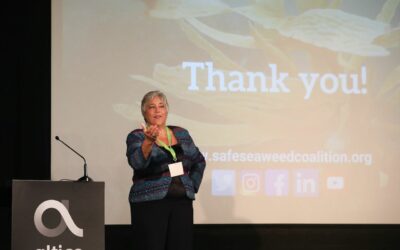
What a week for our Seaweed Revolution! We took advantage of United Nation's Ocean Conference to actively raise awareness on the potential for seaweed to support SDG14, starting with our very own Annual meeting and Seaweed Day on June 29th at Forum Picoas. Above is a...
Seaweed: A Revolution to Achieve Goal 14 and More
Official Side Event Safe Seaweed Coalition, in partnership with Australian Seaweed Institute and Lloyd’s Register Foundation Seaweed: A Revolution to Achieve Goal 14 and More June 30, 11:30-12:45 Committee Room, Altice Arena The event aims to highlight seaweed’s...
Safe Seaweed Coalition Annual Meeting & Seaweed Day, June 29th in Lisbon
Our first Annual Meeting will take place on June 29th, 10.30AM in Lisbon on the margin of the UN Ocean Conference! Venue is located in central Lisbon at Forum Picoas. We are calling on our membership to join in person or virtually to this important milestone on the...
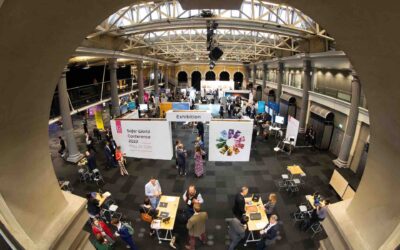
On our way back from #SaferWorld22
Huge thanks to all our partners and visitors who participated during these two wonderful days at Lloyd's Register Foundation's Safer World Conference! Recordings of the two days will be available for up to 90 days on demand on the Safer World Conference Attendee Hub....
Join the Coalition next week at Lloyd’s Register Foundation’s Safer World Conference!
The Seaweed industry and the Coalition will feature prominently next week at Lloyd's Register Foundation's Safer World Conference in London, a two-day hybrid conference bringing together thought leaders from research, academia, business and government to discuss...

The United Nations Environment Programme is looking for a Seaweed Farming Expert
The United Nations Environment Programme (UNEP) is looking for a Seaweed Farming Expert to carry out a technical in-depth situational analysis for the design and implementation of a sustainable scaling model for seaweed farming. This work will verify seaweed farming...
Safe Seaweed Coalition: 2021 Lookback & 2022 Look Forward
As the Safe Seaweed Coalition enters its second year of existence, our team wishes to look back at the substantial achievements of 2021 and the exciting agenda for seaweed in this coming year. In view of our worldwide geographic dispersion, we will organize two...