
News
Latest News & Upcoming Events
Launch of the United Nations Global Seaweed Initiative (UNGSI)
UNGA 80 side event 6:15-7:30 pm EDT September 23, Conference Room 7, UN HQ, New York Background: Seaweed offers an array of benefits for people and the planet, including contributing to food and nutrition security in diverse ways, providing significant opportunities...
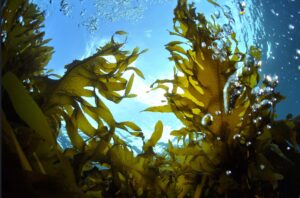
Seaweeds and Climate: Why do we need a UN Global Seaweed Initiative?
GSC Climate Week event 3:30-5:30 pm EDT, September 22, UNGC Boardroom, New-York Background: Seaweeds help mitigate climate change by absorbing CO2 and nutrients from the ocean, serving as a source material for bioplastics and potentially biofuels that reduce reliance...
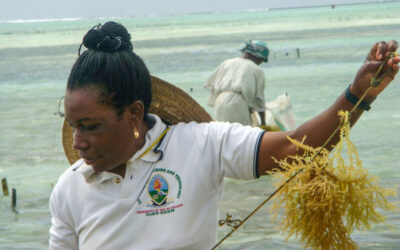
In Memoriam: Dr. Flower Msuya
It is with heavy hearts that we announce the passing of Dr. Flower Msuya, a founding and pivotal member of the Global Seaweed Coalition since its inception. Dr. Msuya’s work has inspired and shaped a whole generation, including the young generation of Tanzanian...
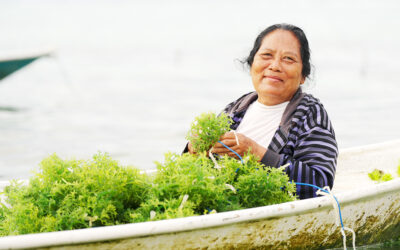
Supporting seaweeds and their myriad contributions to advancing sustainable, inclusive, science- and evidence-based solutions for the 2030 Agenda and beyond
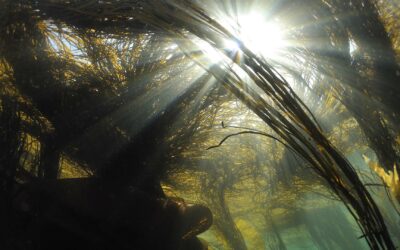
Madagascar, Indonesia, France, UN entities & Global Seaweed Coalition announce support for the creation of a UN Global Seaweed Initiative at the 3rd United Nations Ocean Conference, Nice, France
A coalition of governments, UN entities, and partners has announced the development of a United Nations Global Seaweed Initiative (UNGSI) — a collaborative platform to promote global efforts for safe and sustainable development of the seaweed sector supported by...
La Baleine event at UNOC3: Towards a UN taskforce on seaweed
10 June 2025, 10:15 - 11:15 hrs. Palais des Expositions, Green zone, Nice, France This session details the UN Taskforce on Seaweed - an initiative bringing together partners to unlock the potential of seaweed for sustainable food systems, climate resilience, and...
Shaping a Sustainable Future for Seaweed in a Regenerative Blue Economy
June 7, 11:30am – 1:00pm, Grimaldi Forum, Monaco Seaweed holds immense potential for regenerating the blue economy, contributing to climate resilience, food security and sustainable livelihoods. This event offers a unique opportunity to highlight the untapped...
Toward the creation of a UN task force on seaweed – Raising the level of ambition for a sustainable blue economy
The Global Seaweed Coalition will host an official in person side-event in the Blue Zone during the 2025 UN Ocean Conference in Nice, France, entitled “Toward the creation of a UN task force on seaweed – Raising the level of ambition for a sustainable blue economy” ...
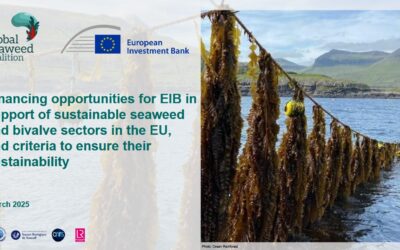
Unlocking the Potential of Europe’s Seaweed and Bivalve Industries
Seaweed and bivalve aquaculture hold immense promise for restoring ocean health, mitigating climate change, and strengthening coastal economies. Market forecasts point to double-digit growth over the next decades. Yet, despite increasing investment and...
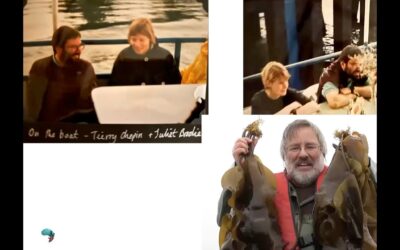
In Memoriam: Professor Thierry Chopin
Tribute to Professor Thierry Chopin, by Dr. Philippe Potin, scientific director of the Global Seaweed Coalition. Throughout his career, Thierry was known for his enthusiasm, charisma, and sense of humor, leaving a lasting impact on the scientific community and...