News
Latest News & Upcoming Events
The Global Seaweed Coalition is looking for its new Scientific Officer
The Global Seaweed Coalition is looking for its new Scientific Officer! Hosted by our founding partners from CNRS, the Scientific Officer will manage GSC funded projects and be the main contact point with project holders. Supervised by the GSC Scientific Director,...
Global Seaweed Coalition Annual Meeting: 5 October 2023 in Paris
After a busy transition year, the Global Seaweed Coalition is proud to invite our growing community to our second Annual Meeting, to be held 5 October 2023 at the Maison de l'Océan in Paris. This Annual Meeting is an opportunity to look back together at our...
Safe Seaweed Coalition becomes the Global Seaweed Coalition
Seaweed stakeholders stepping up global collaboration to scale climate and nature solutions The Safe Seaweed Coalition is proud to announce it has become the Global Seaweed Coalition (GSC), hosted by its founding partner United Nations Global Compact. The potential...
UN Plastic Treaty negotiations: Call to all Seaweed Packaging Companies
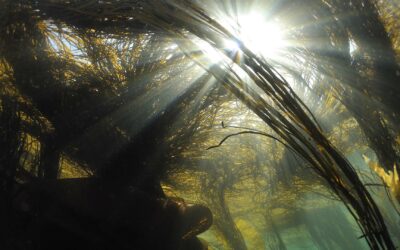
We are pleased to invite all Seaweed Packaging Companies to attend the “Seaweed as a Sustainable and Biodegradable Alternative to Plastic Packaging” meeting, taking place on the 1st of June from 11:00 to 13:00 CET (TBC) in Paris, France (location to be confirmed). The...
8th European Phycological Congress (EPC8): August 20th-26th in Brest, France
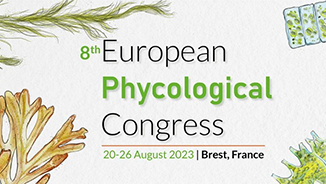
🌊 The early bird registration for the 8th European Phycological Congress (EPC8) has been extended until March 31 2023! The Scientific Program of EPC8 was convened by Inka. Bartsch and Wiebe Kooistra and consists of plenary and keynote lectures by 44 renowned...

Member Roundtables: February 27th!
All our members are invited to join our member Roundtables on February 27th. We will holdtwo sessions : one at 11:00AM CET and one at 3PM CET in order to accommodate our worldwide membership. These sessions will include important updates and opportunities for members...

Study: how to increase the communication capacity of the Seaweed Revolution?
We are engaged with a team of CHARM-EU students conducting a research study to better understand the general public’s current awareness of seaweed and highlight potential gaps or needs. Their research is planned to be presented and shared in the context of the...
Congratulations to our Spring 2022 Grantees!
Our Annual Meeting in Lisbon was the opportunity to introduce our Spring 2022 Grantees to our worldwide community! After a highly competitive evaluation process by our advisory board of seaweed industry experts, the Safe Seaweed Coalition Steering Committee made the...
Thrilling moments for Seaweed at UNOC in Lisbon
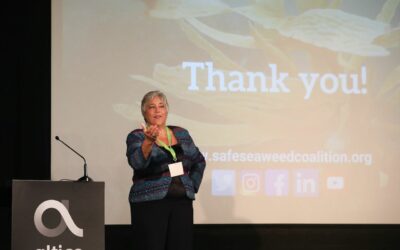
What a week for our Seaweed Revolution! We took advantage of United Nation's Ocean Conference to actively raise awareness on the potential for seaweed to support SDG14, starting with our very own Annual meeting and Seaweed Day on June 29th at Forum Picoas. Above is a...
Seaweed: A Revolution to Achieve Goal 14 and More
Official Side Event Safe Seaweed Coalition, in partnership with Australian Seaweed Institute and Lloyd’s Register Foundation Seaweed: A Revolution to Achieve Goal 14 and More June 30, 11:30-12:45 Committee Room, Altice Arena The event aims to highlight seaweed’s...
On Ubuntoo

Engineered Bacteria Unlock Seaweed Potential: Dual Enzyme System Enables Complete Alginate Depolymerization
Researchers have developed an engineered bacterial system that enables complete breakdown of alginate, a major polysaccharide in brown seaweed, unlocking its potential for industrial use. By introducing two enzymes, AlyB and AlyD, from a marine bacterium into C. glutamicum, the team achieved efficient depolymerization of alginate.
AlyB breaks alginate into smaller oligomers, while AlyD further converts these into simple sugars, working in a complementary manner. The study also identified a novel enzymatic activity in AlyB, marking the first report of such functionality in its enzyme family.
To demonstrate application, the resulting sugars were used to support engineered E. coli producing riboflavin (vitamin B2), showing potential for biomanufacturing.
This research paves the way for integrated bioprocesses that convert seaweed into valuable products such as food ingredients, biochemicals, and biofuels, advancing the use of seaweed as a renewable industrial resource.
Source : EurekAlert!

Keen on Kelp? A Sustainable Business Faces Barriers
Kelp farming in Nova Scotia is emerging as a promising green industry with economic potential, but it faces several structural and regulatory challenges. Kelp is a versatile, low-cost crop used in food, fertilizers, and cosmetics, and requires no external inputs such as freshwater or fertilisers, making it highly sustainable.
Organizations like the Ecology Action Centre (EAC) are supporting industry growth through research, education, and economic planning. While there has been a gradual increase in kelp farming activity, the sector remains small-scale and in early development. A key focus is improving market viability and identifying profitable product formats.
However, significant barriers persist. Processing capacity is limited, creating bottlenecks due to kelp’s highly perishable nature. Regulatory challenges also hinder growth, such as Health Canada classifying sugar kelp as a novel food, and restrictions from the Canadian Food Inspection Agency limiting market access for products.
Despite this, innovators are finding niche applications. For example, kelp-based products like soil enhancers and coastal restoration materials are showing promise. Research at Dalhousie University is also advancing cultivation techniques to improve yields.
Overall, while the sector faces hurdles in regulation, infrastructure, and market development, there is strong optimism that kelp farming can become a sustainable economic driver with continued investment, research, and policy support.
Source : The Signal

Seaweed innovator co-founded by Insider Rising Star secures €3.5m project
PlantSea has won the project from the European Innovation Council, one of Europe’s most competitive innovation programmes.
Source : Insider Media
.webp )
From Shore to Plate: How Irish Seaweed is Making Waves on Restaurant Menus
Irish seaweed is gaining prominence in the culinary world as chefs increasingly incorporate it into modern dishes, transforming a traditionally overlooked resource into a premium, sustainable ingredient. Varieties such as dillisk, carrageen moss, and sea lettuce, harvested along Ireland’s coastline, are now featured in breads, butters, soups, and seafood dishes, valued for their umami flavour and mineral-rich profile.
This shift is driven by growing demand for locally sourced, health-conscious, and sustainable foods. Seaweed requires no freshwater, fertilisers, or arable land, making it an environmentally friendly alternative to conventional ingredients. Harvesting is often done carefully by hand, ensuring long-term ecosystem health.
Nutritionally, seaweed is rich in vitamins, minerals, antioxidants, further boosting its appeal among chefs and consumers. Its versatility allows it to enhance both traditional Irish cuisine and contemporary global menus.
As a result, seaweed is moving beyond niche use and becoming a mainstream ingredient in upscale dining, highlighting a broader trend toward sustainable marine-based foods and unlocking new opportunities across the food value chain.
Source : The Canadian Press News

From Ocean to Acre: Kelp Blue’s Big Bet on Seaweed-powered Agriculture
Kelp Blue is advancing large-scale offshore seaweed farming as a sustainable solution for agriculture, focusing on cultivating Macrocystis pyrifera (giant kelp) to produce consistent, scalable raw materials for biostimulants. The company addresses a key industry challenge by developing stable ocean farming systems that avoid reliance on irrigation, land, or chemical inputs.
Its flagship product, StimBlue+, is derived from cultivated rather than wild seaweed, ensuring consistent quality, traceability, and performance. The biostimulant delivers strong results at lower application rates, improving yields and farmer profitability across crops such as berries, vineyards, and vegetables. It is designed to complement conventional fertilisers by enhancing nutrient uptake and efficiency.
Sustainability is central to Kelp Blue’s model. The company harvests only 10 percent of kelp biomass, preserving marine ecosystems, supporting biodiversity, and enabling carbon sequestration. Verified assessments show that its operations are carbon negative, removing more CO2 than they emit.
Through a combination of scientific trials and on-farm validation, Kelp Blue demonstrates clear return on investment for farmers, addressing adoption barriers in the biostimulant market. Looking ahead, the company sees ocean-based agriculture as a transformative pillar of the global food system, offering scalable, climate-positive solutions that do not compete for land or freshwater while contributing to ecosystem restoration and sustainable input production.
Source : Agro Spectrum India
.avif )
CNA Correspondent - Inside Indonesia's Seaweed Economy
Indonesia, the world’s largest producer of tropical seaweed, plays a vital role in global supply chains and supports thousands of coastal livelihoods. Seaweed, used across food, cosmetics, and pharmaceuticals, is a key export commodity often referred to as the country’s “green gold.”
However, the industry faces significant challenges due to its heavy reliance on exporting raw seaweed, particularly to China. This dependence exposes farmers to volatile global prices and fluctuating demand, leading to unstable incomes despite strong production volumes.
Environmental factors such as changing sea conditions further impact yields and quality, adding uncertainty for small-scale farmers who depend on seaweed as a primary livelihood. To address these issues, Indonesia is investing in domestic processing and downstream manufacturing. By moving up the value chain and diversifying export markets, the country aims to stabilize incomes, capture higher value, and strengthen its position as an integrated player in the global seaweed industry.
Source : Channel News Asia

Women in Ocean Food Kicks Off First Africa Studio in Tanzania
The Women in Ocean Food Africa (WIOF) program has launched its first African studio in Tanzania, bringing together 11 women-led startups from across Sub-Saharan Africa working in aquaculture, seaweed, marine biotech, and seafood value chains.
Organised by Hatch Blue with partners including Conservation International Ventures and supported by global foundations, the equity-free programme provides 12 months of support through mentoring, investor connections, and business development.
The in-person studio in Dar es Salaam from April 7 to 17 includes site visits, mentoring sessions, and a Demo Day where startups present to investors. Notable participants include seaweed-focused ventures such as Care Cove, Tanzania, supporting women in seaweed farming and value addition, and SEABLUE Innovation, Tanzania, which develops seaweed-based food and biodegradable materials.
The program aims to strengthen women’s economic empowerment while advancing sustainable ocean-based solutions. It reflects growing momentum in Africa’s blue economy, supporting inclusive entrepreneurship, climate resilience, and marine ecosystem restoration.
Source : The Fish Site

Clean Label Drives Protein Innovation from Seaweed Stabilizers to Yeast-based Alternatives
Clean-label trends are accelerating innovation in protein ingredients, with seaweed-based stabilizers and yeast-derived proteins emerging as key solutions for improving functionality while simplifying ingredient lists. At the forefront, Marine Biologics has developed SeaTex, a macroalgae-based stabilizer that enables protein beverages to reduce additives like gums and buffering agents.
As a single-ingredient brown seaweed powder, SeaTex can cut formulations from nine ingredients to six while maintaining stability, improving sensory neutrality, and potentially lowering production costs. Its applications extend beyond beverages to alternative dairy, snacks, frozen desserts, and bakery products.
Alongside seaweed innovations, fermented yeast protein is gaining traction. Angel Yeast’s AngeoPro offers a neutral taste, high protein content (up to 90%), and a complete amino acid profile, making it suitable for a wide range of products including protein powders, beverages, snacks, and bakery items. It also contains fiber, vitamins, and minerals, and can enhance flavor in savory applications.
Together, these innovations highlight a shift toward high-functionality, clean-label protein solutions, leveraging marine and microbial sources to meet consumer demand for simpler, more sustainable ingredients while maintaining performance and cost efficiency.
Source : Food Navigator USA

Seaweed Industry Business Lessons from Ocean's Balance CEO
Ocean’s Balance CEO Mitchell Lench highlights that early enthusiasm for seaweed in the US did not translate into immediate commercial success. The market remained immature, with weak demand, limited investor interest, and infrastructure gaps, forcing companies to adjust expectations and strategies to survive.
A key lesson is to prioritize partnerships over building standalone consumer brands. By supplying ingredients to established food and pet food companies, seaweed businesses can scale more efficiently and reduce market risk compared to launching niche products independently.
Infrastructure remains a major constraint, particularly processing capacity such as dehydration. Ocean’s Balance invested in shared processing capabilities to support both its own operations and independent harvesters, helping stabilize supply chains and ensure consistent quality.
The company’s journey shows that success in the seaweed sector requires patience, adaptability, strong B2B partnerships, and investment in enabling infrastructure to unlock scalable, reliable growth.
Source : Undercurrent News

fondation-cnrs.org
À l’occasion du sommet ChangeNOW 2026, organisé à Paris du 30 mars au 1er avril, la Global Seaweed Coalition et la Fondation CNRS se mobilisent pour promouvoir un développement durable et structuré du secteur des algues. Cet événement international, dédié aux solutions pour la planète, constitue une vitrine stratégique pour mettre en lumière le potentiel écologique, économique et social des algues.
Soutenue par la Lloyd’s Register Foundation, le Pacte mondial des Nations Unies et le CNRS, la Global Seaweed Coalition rassemble des acteurs du monde entier issus de l’ensemble de la chaîne de valeur. Son objectif est de libérer tout le potentiel des algues en favorisant la coopération internationale, l’innovation scientifique et le partage de bonnes pratiques.
Les algues représentent en effet une ressource clé pour répondre à plusieurs défis contemporains, qu’il s’agisse de sécurité alimentaire, de transition énergétique ou de préservation des écosystèmes marins. Leur culture et leur transformation offrent des perspectives importantes en matière de développement durable, tout en contribuant à la résilience des territoires côtiers.
La participation de la Fondation CNRS à ChangeNOW 2026 s’inscrit dans sa mission de soutien aux laboratoires et aux chercheurs du CNRS. En tant que vecteur de mécénat en France et à l’international, elle mobilise entreprises et particuliers afin de financer des projets scientifiques à fort impact. Sa collaboration avec la Global Seaweed Coalition illustre cette volonté de renforcer les synergies entre recherche académique et acteurs économiques.
À travers cette mobilisation conjointe, les partenaires entendent structurer durablement la filière des algues, encourager l’investissement responsable et soutenir l’émergence de solutions innovantes fondées sur la science. Leur présence à ChangeNOW 2026 vise ainsi à fédérer les parties prenantes autour d’une vision commune pour l’avenir du secteur des algues, en mettant la recherche et la coopération internationale au cœur des transformations nécessaires.
Source : fondation-cnrs.org